Showing posts with label Christian Walk. Show all posts

Friday, July 17, 2015

How Then Shall We Live, According to a Puritan

Richard Rogers, "Seven Treatises":

Sundry necessary observations for a Christian, fit also to meditate upon. 
1. That we keep a narrow watch over our hearts, words, and deeds continually. 
2. That with all care the time be redeemed, which hath been idly, carelessly, and unprofitably spent. 
3. That once in the day at the least private prayer and meditation be used.
4. That care be had to do, and receive good in company.
5. That our family be with diligence and regard instructed, watched over and governed.
6. That no more time or care be bestowed in matters of the world, then must needs.
7. That we stir up ourselves to liberality to God's Saints.
8. That we give not the least bridle to wandering lusts and affections.
9. That we prepare ourselves to bear the cross, by what means it shall please God to exercise us.
10. That we bestow some time not only in mourning for our own sins, but also for the sins of the time and age wherein we live.
11. That we look daily for the coming of our Lord Jesus Christ, for our full deliverance out of this life.
12. That we use (as we shall have opportunity, at least as we shall have neccessity) to acquaint our selves with some godly and faithful person, with whom we may confer of our Christian estate, and open our doubts, to the quickening up of Gods graces in us.
13. That we observe the departure of men our of this life, their mortality, the vanity and alteration of things below, the more to condemn the world, and to continue our longing after the life to come. And that we meditate and muse often of our own death, and going out of this life, how we must lie in the grave, all our glory put off; which will serve to beat down the pride of life that is in us.
14. That we read somewhat daily of the holy Scriptures, for the further increase of our knowledge, if it may be.
15. That we enter into covenant with the Lord to strive against all sin, and especially against the special sins and corruptions of our hearts and lives, wherein we have most dishonored the Lord, and have raised up most guiltiness to our own consciences, and that we carefully see our covenant be kept and continued.
16. That we mark how sin dieth and is weakened in us, and that we turn not to our old sins again, but wisely avoid all occasions to sin.
17. That we fall not from our first love, but continue still our affections to the liking of Gods word, and all the holy exercises of religion diligently hearing it, and faithfully practicing the same in our lives and conversations: that we prepare our selves before we come, and meditate and confer of that we hear, either by our selves, or with other: and so mark our daily profiting in religion.
18. That we be often occupied in meditating on Gods benefits and works, and sound forth his praises for the same.
19. That we exercise our faith by taking comfort and delight in the great benefit of our redemption by Christ, and the fruition of Gods presence, in his glorious and blessed kingdom.
20. Lastly, that we make not these holy practices of repentance common in time, nor use them for course.


Wednesday, January 29, 2014

A Kind of Paradise

John Bunyan, Pilgrim's Progress, in The Works of John Bunyan, Vol. 3, p. 132:

Now I saw in my dream, that Christian went not forth alone, for there was one whose name was Hopeful (being made so by the beholding of Christian and Faithful in their words and behaviour, in their sufferings at the Fair), who joined himself unto him, and, entering into a brotherly covenant, told him that he would be his companion.


Richard Sibbes on the means of grace known to Puritans as 'holy conference,' Bowels Opened, or, Expository Sermons on Canticles IV. 16, V. VI., in The Works of Richard Sibbes, Vol. 2, pp. 133-134:

We see there is excellent use of holy conference. The church coming to the daughters of Jerusalem, speaking of Christ her beloved, that she is 'sick of love,' &c., the daughters of Jerusalem are inquisitive to know Christ more and more. Here is the benefit of holy conference and good speeches. One thing draws on another, and that draws on another, till at length the soul be warmed and kindled with the consideration and meditation of heavenly things. That that is little in the beginning may bring forth great matters. This question to the church and talking with her, 'I charge you, if you find my beloved, to tell him that I am sick of love,' breeds questions in others, 'What is thy beloved?' &c. Whence, upon the description of her beloved, her heart is kindled, she findeth her beloved; so that talking of holy and heavenly things is good for others and ourselves also. 
It is good for others, as it was good for the daughters of Jerusalem here; for thereupon they are stirred up to be inquisitive after Christ. And it was good for the church herself, for hereupon she took occasion to make a large commendation of Christ, wherein she found much comfort.
2. Good conference, then, is good for ourselves; for we see a little seed brings forth at length a great tree, a little fire kindleth much fuel, and great things many times rise out of small beginnings. It was a little occasion which Naaman the Assyrian had to effect his conversion, 2 Kings v. 2. There was a poor banished woman, a stranger, who was a Jewish maid-servant. She told her lord's servants that there was a prophet in Jewry that could heal him, whereupon he came thither, and was converted and healed. And Paul sheweth that the very report of his bonds did a great deal of good in Cesar's house, Philip, i. 13. Report and fame is a little matter, but little matters make way for the greater.
This may put us in mind to spend our time fruitfully in good conference, when in discretion it is seasonable. We know not, when we begin, where we may make an end. Our souls may be carried up to heaven before we are aware, for the Spirit will enlarge itself from one thing to another. 'To him that hath shall be given more and more still,' Mat. xiii. 12. God graciously seconds good beginnings. We see the poor disciples, when they were in a damp for the loss of Christ, after he comes, meets them, and talks of holy things. In that very conference their hearts were warmed and kindled, Luke xxiv. 32. For, next to heaven itself, our meeting together here, it is a kind of paradise. The greatest pleasure in the world is to meet with those here whom we shall ever live with in heaven. Those who are good should not spend such opportunities fruitlessly.
And to this end, labour for the graces of the communion of saints; for there is such a state. We believe it as an article of our creed. How shall we approve ourselves to be such as have interest unto the communion of saints, unless we have spirits able to communicate good to others? pitiful and loving spirits, that we may speak a word in due season.

Friday, December 27, 2013

Is Christ a Bundle of Myrrh to You?

"A bundle of myrrh is my beloved unto me." -- Cant. 1.13

Ralph Robinson, Christ All in All, pp. 338-339:

Is it so with you? is Christ a bundle of myrrh to you or no? Every man thinks he doth prize Christ, but most deceive themselves.
Try, therefore, by the five following notes:
1. Who reigns in your hearts? He that is sovereign Lord and commander, he it is that is esteemed. Hath Christ the throne? or hath sin, the world, the throne? Do you lay that charge upon your souls which the Church doth? Psal. xxiv. 7, 8. If Christ be not principal in your hearts, if all things do not bow to Christ, he is not esteemed.
2. Who hath your thoughts? Do you meditate on Christ, do you study Christ, or do you study the world? That of the apostle is excellent to this purpose, 1 Cor. ii. 2. There was nothing so much in his thoughts as Jesus Christ was. Desire of much communion is a true argument of esteem. Anima est ubi amat. Can you say, as the Church in this chapter, ver. 7, Set me where thou feedest? If so, then Christ is high in your hearts indeed.
3. What opinion have you of his members? Do you value them? Are they precious in your eyes because of their relation to Christ, and because of their similitude to Christ? See 1 John v. 1; he that loves not saints in their meanest dress, before sinners in their best robes, prizeth not Christ truly at all. 
4. What do ye do to bring others to Christ? Do you woo souls to marry with Christ? Do you make it your work to cause others to be enamoured of him? Then you may conclude you esteem him indeed. But if you be careless whether Christ be without disciples or have disciples, he is not rightly prized of you.
5. Do ye mourn for his dishonour? David saith, Psal. lxix. 9, 'The reproaches of them that reproached thee fell on me.' Can you say so? You are haters of Christ if you can hear or see him dishonored, and not lay it to your heart.


Wednesday, July 10, 2013

A Prayer and Half A Prayer For Sanctification

Augustine, Confessions 8.7.17:

But now, the more ardently I loved those whose healthful affections I heard of, that they had resigned themselves wholly to Thee to be cured, the more did I abhor myself, when compared with them. For many of my years (some twelve) had now run out with me since my nineteenth, when, upon the reading of Cicero's Hortensius, I was stirred to an earnest love of wisdom; and still I was deferring to reject mere earthly felicity, and give myself to search out that, whereof not the finding only, but the very search, was to be preferred to the treasures and kingdoms of the world, though already found, and to the pleasures of the body, though spread around me at my will. But I wretched, most wretched, in the very commencement of my early youth, had begged chastity of Thee, and said, "Give me chastity and continency, only not yet." For I feared lest Thou shouldest hear me soon, and soon cure me of the disease of concupiscence, which I wished to have satisfied, rather than extinguished. And I had wandered through crooked ways in a sacrilegious superstition, not indeed assured thereof, but as preferring it to the others which I did not seek religiously, but opposed maliciously.

Elizabeth S. Rowe, Devout Exercises of the Heart, in Meditation and Soliloquy, Prayer and Praise XXV:

A Prayer for Speedy Sanctification
O Lord God, great and holy, all-sufficient and full of grace if thou shouldst bid me form a wish, and take whatsoever in heaven or in earth I had to ask it should not be the kingdoms of this world, nor the crowns of princes; no nor should it be the wreaths of martyrs nor the thrones of archangels; my request is to be made holy: this is my highest concern. Rectify the disorder sin has made in my soul, and renew thy image there; let me be satisfied with thy likeness. Thou hast encompassed my path with mercy in all other respects, and I am discontented with nothing but my own heart, because it is so unlike the image of thy holiness, and so unfit for thy immediate presence. 
Permit me to be importunate here, O blessed God, and grant me the importunity of my wishes; let me be favoured with a gracious and speedy answer, for I am dying while I am speaking; the very breath with which I am calling upon thee is carrying away part of my life! this tongue that is now invoking thee, must shortly be silent in the grave; these knees, that are bent to pay thee homage, and these hands that are now lifted to the most high God for mercy, must shortly be mouldering to their original dust: these eyes will soon be closed in death, which are now looking up to thy throne for a blessing. O prevent the flying hours with thy mercy, and let thy favour outstrip the hasty moments.
Thou art unchanged, while rolling ages pass along; but I am decaying with every breath I draw; my whole allotted time to prepare for heaven, is but a point compared with thy infinite duration. The shortness and vanity of my present being, and the importance of my eternal concerns, join together to demand my utmost solicitude, and give wings to my warmest wishes. -- Before I can utter all my present desires, the hasty opportunity perhaps is gone, the golden minute vanished, and the season of mercy has taken its everlasting flight.
O God of ages! hear me speedily and grant my request while I am yet speaking; my frail existence will admit of no delay; answer me according to the shortness of my duration, and the exigence of my circumstances. -- My business, of high importance as it is, yet is limited to the present now, the passing moment; for all the powers on earth cannot promise me the next. 
Let not my pressing importunity, therefore, offend thee; my happiness, my everlasting happiness, my whole being is concerned in my success: as much as the enjoyment of God himself is worth, is at stake.
Thou knowest, O Lord, what qualifications will fit me to behold thee; thou knowest in what I am defective; thou canst prepare my soul in an instant to enter into thy holy habitation. I breathe now, but the next moment may be death, let not that fatal moment come before I am prepared. -- The same creating voice that said, "Let there be light, and there was light," can in the same manner, purify and adorn my soul, and make me fit for thy own presence; and my soul longs to be thus purified and adorned. O Lord, delay not, for every moment's interval is a loss to me, and may be a loss unspeakable and irreparable. -- Thy delay cannot be the least advantage to thee; thy power and thy clemency are as full at this present instant as they will be the next, and my time as fleeting, and my wants as pressing.
Remember, O eternal God, my lost time is forever lost, and my wasted hours will never return, my neglected opportunities can never be recalled; to me they are gone forever, and cannot be improved; but thou canst change my sinful soul into holiness by a word, and set me now in the way to everlasting improvement.
O let not the Spirit of God restrain itself, but bless me according to the fulness of thy own being, according to the riches of thy grace in CHRIST JESUS, according to thy infinite, inconceivable love, manifested in that glorious gift of thy beloved Son, wherein the fulness of thy Godhead was contained; it is through his merit and mediation I humbly wait for all the unbounded blessings I want or ask for.


Monday, July 1, 2013

Roll Upon the Lord

Jonathan Edwards, "Miscellaneous Remarks Concerning Faith," in The Works of Jonathan Edwards, Vol. 2, p. 587:

Sec. 63. Rolling oneself, or burden, on the Lord, is an expression used as equivalent to trusting. Psal. xxii. 8. "he trusted in the Lord, that he would deliver him:" in the original, "He rolled himself on the Lord." Psal. xxxvii.5. "Commit thy way unto the Lord; trust also in him, and he shall bring it to pass." In the Hebrew, Roll thy way upon the Lord. Prov. xvi.3. "Commit thy works unto the Lord, and thy thoughts shall be established." In the Hebrew, Roll thy works.

John Winthrop, March 18, 1627 Letter to His Son, in Robert C. Winthrop, Life and Letters of John Winthrop, p. 250:

But such as will roll their ways upon the Lord, do find him always as good as his word.

John Cotton, An Exposition of First John, p. 536:

How then can this be called believing on Christ, when the heart is not grounded in him nor rests in him? I answer, there is a faith in Christ when the heart does not rest on Christ but is only grounded on him, or rolls itself on him, which may be done while the heart is yet in motion. Sometimes it rolls one way, sometimes another; yet such a man believes on Christ, for he is rolling toward him so that he may lie on him. "Commit your ways to the Lord" (Ps. 37:5); in the original, "roll your ways upon the Lord"; lean your soul that way; roll toward him so that you might rest upon him. "Trust in the Lord with all your heart, and lean not to your own understanding" (Prov. 3:6); a man may be said to lean upon the Lord, when he is not yet settled upon him.

Ps. 22.8, Bay Psalm Book:

Vpon the Lord he rold himselfe,
let him now rid him quite:
let him deliver him, because
in him he doth delight.

Anne Bradstreet, "In my Solitary houres in my dear husband his Absence," Robert Hutchinson, ed., The Poems of Anne Bradstreet, p. 74:

O stay my heart on thee, my God,
Uphold my fainting Soul!
And, when I know not what to doe,
I'll on thy mercyes roll.

Edward Taylor, "God's Determinations," in Thomas H. Johnson, ed., The Poetical Works of Edward Taylor, p. 91 (Lines 1625-1627):

And thus he doth involve the doubting Soule
In dismall doubts and makes it fear to rowle
Himselfe on Christ for fear it should presume.


Sunday, June 23, 2013

Nooks and Books

Thomas à Kempis, author of The Imitation of Christ, which is said to be (next to the Bible) the most-translated book in world history, had a saying: "In omnibus requiem quaesivi, sed non inveni, nisi in hoexkens ende boexkens" -- "I have sought everywhere for peace, but I have found it not save in nooks and in books."

His magnum opus was recommended reading by divines such as Gisbertus Voetius, Willem Teellinck, Wilhemus à Brakel, Henry Scougal, Richard Baxter, and Thomas Chalmers, among others. Read him as he wished to be read -- with discernment in the Lord. Here is some wisdom gleaned from à Kempis, a man who both studied much and loved much, on the place of books in the Christian life:

If thou knewest the whole Bible, and the sayings of all the philosophers, what should all this profit thee without the love and grace of God? (Book 1, Chapter 1)
Of a surety, at the Day of Judgment it will be demanded of us, not what we have read, but what we have done; not how well we have spoken, but how holily we have lived. (Book 1, Chapter 3)
It is Truth which we must look for in Holy Writ, not cunning of words. All Scripture ought to be read in the spirit in which it was written. We must rather seek for what is profitable in Scripture, than for what ministereth to subtlety in discourse. Therefore we ought to read books which are devotional and simple, as well as those which are deep and difficult. And let not the weight of the writer be a stumbling-block to thee, whether he be of little or much learning, but let the love of the pure Truth draw thee to read. Ask not, who hath said this or that, but look to what he says. (Book 1, Chapter 5)
Our own curiosity often hindereth us in the reading of holy writings, when we seek to understand and discuss, where we should pass simply on. If thou wouldst profit by thy reading, read humbly, simply, honestly, and not desiring to win a character for learning. Ask freely, and hear in silence the words of holy men; nor be displeased at the hard sayings of older men than thou, for they are not uttered without cause. (Book 1, Chapter 5)
Be thou never without something to do; be reading, or writing, or praying, or meditating, or doing something that is useful to the community. (Book 1, Chapter 19)
Whereupon then can I hope, or wherein may I trust, save only in the great mercy of God, and the hope of heavenly grace? For whether good men are with me, godly brethren or faithful friends, whether holy books or beautiful discourses, whether sweet hymns and songs, all these help but little, and have but little savour when I am deserted by God's favour and left to mine own poverty. There is no better remedy, then, than patience and denial of self, and an abiding in the will of God. (Book 2, Chapter 9)
There are some who carry their devotion only in books, some in pictures, some in outward signs and figures; some have Me in their mouths, but little in their hearts. Others there are who, being enlightened in their understanding and purged in their affections, continually long after eternal things, hear of earthly things with unwillingness, obey the necessities of nature with sorrow. And these understand what the Spirit of truth speaketh in them; for He teacheth them to despise earthly things and to love heavenly; to neglect the world and to desire heaven all the day and night. (Book 3, Chapter 4)
Great is the difference between a godly man, illuminated with wisdom, and a scholar learned in knowledge and given to books. Far nobler is that doctrine which floweth down from the divine fulness above, than that which is acquired laboriously by human study. (Book 3, Chapter 31)
Never read thou the word that thou mayest appear more learned or wise; but study for the mortification of thy sins, for this will be far more profitable for thee than the knowledge of many difficult questions. (Book 3, Chapter 43)
The voice of books is one, but it informeth not all alike. (Book 3, Chapter 43)
In Thee, therefore, O Lord God, I put all my hope and my refuge, on Thee I lay all my tribulation and anguish; because I find all to be weak and unstable whatsoever I behold out of Thee. For many friends shall not profit, nor strong helpers be able to succour, nor prudent counsellors to give a useful answer, nor the books of the learned to console, nor any precious substance to deliver, nor any secret and beautiful place to give shelter, if Thou Thyself do not assist, help, strengthen, comfort, instruct, keep in safety. (Book 3, Chapter 59)
When I think on these wondrous things, even spiritual comfort whatsoever it be becometh sore weariness to me; for so long as I see not openly my Lord in His own Glory, I count for nothing all which I behold and hear in the world. Thou, O God, art my witness that nothing is able to comfort me, no creature is able to give me rest, save Thou, O my God, whom I desire to contemplate everlastingly. But this is not possible, so long as I remain in this mortal state. Therefore ought I to set myself unto great patience, and submit myself unto Thee in every desire. For even Thy Saints, O Lord, who now rejoice with Thee in the kingdom of heaven, waited for the coming of Thy glory whilst they lived here, in faith and great glory. What they believed, that believe I; what they hoped, I hope; whither they have attained to, thither through Thy grace hope I to come. I will walk meanwhile in faith, strengthened by the examples of the Saints. I will have also holy books for comfort and for a mirror of life, and above them all Thy most holy Body and Blood shall be for me a special remedy and refuge. (Book 4, Chapter 11)


Monday, March 25, 2013

Doing Good

John Tillotson, The Works of Dr. John Tillotson, Vol. 6, Sermon 142, p. 539 (1820 ed.):

To do good, is to be like God, who is good, and doeth good; and it is to be like to him in that which he esteems his greatest glory: it is to be like the Son of God, who, when he was pleased to take our nature upon him, and live here below, and to dwell amongst us, "went about doing good." And it is to be like the blessed angels, the highest rank and order of God's creatures, whose great employment is to be "ministering spirits, for the good of men." So that, for a man to be kind, and helpful, and beneficial to others, is to be a good angel, and a Saviour, and a kind of God too.


Monday, January 21, 2013

Cotton Mather's Resolutions

Cotton Mather, Diary of Cotton Mather, 1681-1724, Vol. 1, pp. 3-5:

12 d. 1 m. [March [1681].]...Butt one special Action of this Day, was to make and write the following:
RESOLUTIONS AS TO MY WALK WITH GOD.
Lord! Thou that workest in mee to will, help mee to resolve.
I. As to my Thoughts.
1. To endeavour, that I will keep God, and Christ, and Heaven, much in my Thoughts.
2. In a special manner, to watch and pray, against lascivious Thoughts, ambitious Thoughts, and wandring Thoughts in the Times of Devotion.
II. As to my Words.
1. To bee not of many Words, and when I do speak, to do it with Deliberation.
2. To remember my obligations to use my Tongue as the Lord's, and not my own: and therefore, to promote savoury Discourse, if I can, wherever I come; and to discourse with such as come fairly in my way, about the Things of their everlasting Peace.
3. Never to answer any weighty Question, without lifting up my Heart unto God, in a Request, that Hee would help me to give a right Answer.
4. To speak Ill of no Man; except, on a good Ground, and for a good End.
5. Seldome to make a Visit, without contriving, what I may do for God, in that Visit.
III. As to my daily Course of Duties.
1. To pray at least thrice, for the most part every Day.
2. To meditate once a Day; in the Meditation proceeding after some such Method as this; that there shall bee two Parts of the work, doctrinal, and applicatory. The doctrinal to bee dispatched in an Answer to a Quaestion. The Applicatory to flow from thence into Examination, Expostulation, Resolution.
3. To make a Custome of propounding to myself, these three Questions, every Night before I sleep.
What hath been the Mercy of God unto mee, in the Day past?What hath been my carriage before God, in the Day past? And,
If I dy this Night is my immortal Spirit safe?
 
4. To lead a Life of heavenly Ejaculations [short prayers to God].
5. To bee diligent in observing and recording of illustrious Providences.But in all, to bee continually going unto the Lord Jesus Christ, as the only Physician, and Redeemer, of my Soul.Lord! Thou that workest in mee to do, help mee to perform.
Penned by, Cotton Mather; A feeble and worthless, yett (Lord! by this Grace!) desirous to approve himself, a sincere and faithful Servant of Jesus Christ. The Lord knowes, how miserably defective I have been, in the performing of what I have thus resolved. But my Defects, have been the matter of my continual Reflections and Abasements before Him. And, for the main, I have made in my Study, to bee abounding in these Works of the Lord. Yea, these Flights of my Soul, Essayes to glorify God, have been but the lower and lesser Flights of my Youth; which I hope, will ere long proceed unto a Mounting up with the Wings of Eagles.


Sunday, December 9, 2012

Do All The Good You Can

Although widely ascribed to John Wesley as his "Rule for Living" or "Rule of Conduct," and sung to the composition by Fanny Crosby, the following lines do not actually appear in the writings of John Wesley:

Do all the good you can,
By all the means you can,
In all the ways you can,
In all the places you can,
At all the times you can,
To all the people you can,
As long as ever you can.

Words and wisdom to similar effect do, however, appear in Richard Baxter, A Christian Directory (1673) in The Practical Works of Richard Baxter, Vol. 1, p. 231 (also cited in William Gearing (English Puritan, c. 1625-c. 1690), The Sacred Diary; or, Select Meditations For Every Part of the Day and the Employments Thereof (1679), p. v, and ascribed to "the judgment of a reverend divine"):

And as these five things are presupposed, so these following are contained in our redeeming time. 1. To see that we cast none of it away in vain; but use every minute of it as a most precious thing, and spend it wholly in the way of duty. 2. That we be not only doing good, but doing the best good we are able and have a call to do. 3. That we do not only the best things, but do them in the best manner, and in the greatest measure, and do as much good as possibly we can. 4. That we watch for special opportunities. 5. That we presently take them when they fall, and improve them when we take them. 6. That we part with all that is to be parted with, to save our time. 7. That we forecast the preventing of impediments, the removal of our clogs, and the obtaining of all helps to expedition in duty. This is the true redeeming of our time.

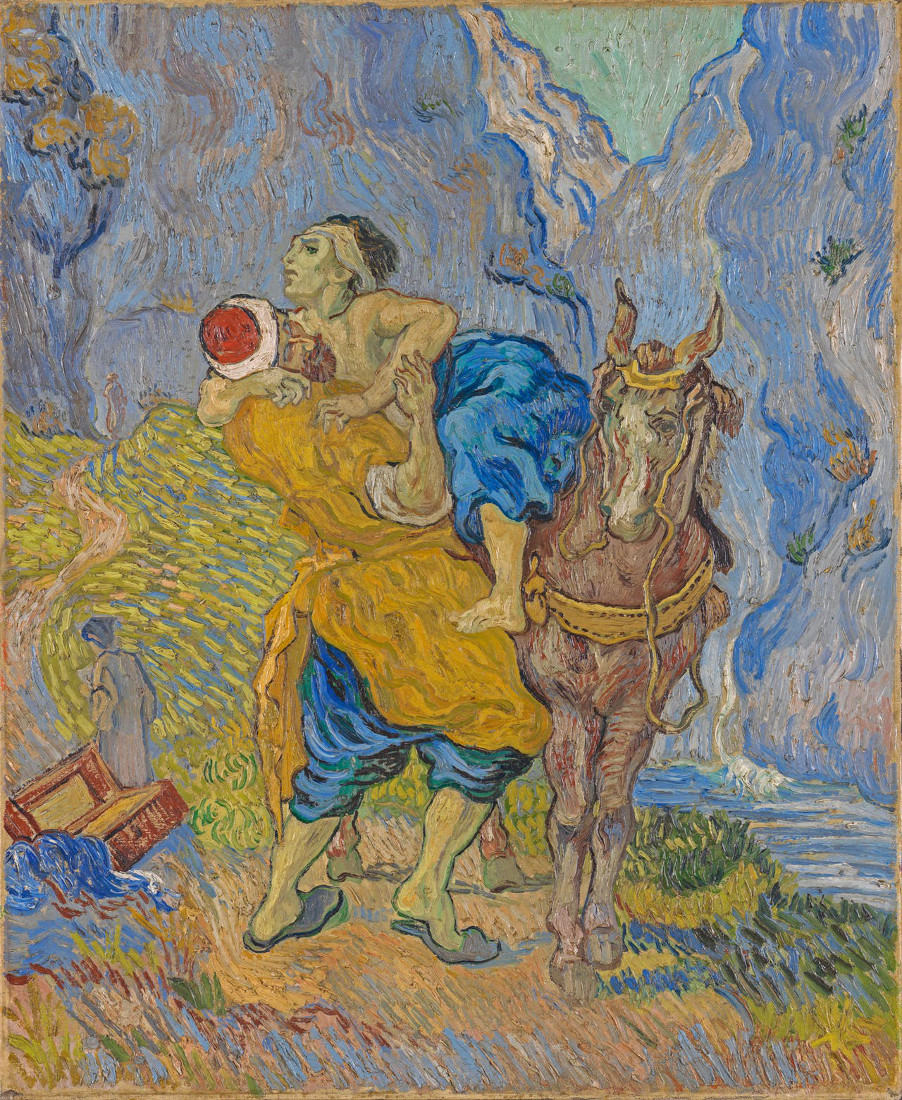
Vincent Van Gogh, The Good Samaritan:

Tuesday, December 4, 2012

The Sweetest Rest


John Bunyan, The Pilgrim's Progress, in Works, Vol. 3, p. 89:

As I walked through the wilderness of this world, I lighted on a certain place, where was a den; and I laid me down in that place to sleep: as I slept, I dreamed a dream.


Richard Baxter, The Saints' Everlasting Rest in Practical Works, Vol. 2, p. 330:

There remaineth a rest to the people of God.
Rest; how sweet a word is this to mine ears! Methinks the sound doth turn to substance, and having entered at the ear, doth possess my brain; and thence descendeth down to my very heart: methinks I feel it stir and work, and that through all my parts and powers, but with a various work upon my various parts. To my wearied senses and languid spirits it seems a quieting, powerful opiate; to my dulled powers it is spirit and life; to my dark eyes it is both eye-salve and a prospective; to my taste it is sweetness; to mine ears it is melody; to my hands and feet it is strength and nimbleness. Methinks I feel it digest as it proceeds, and increase my native heat and moisture; and, lying as a reviving cordial at my heart, from thence doth send forth lively spirits, which beat through all the pulses of my soul. Rest, -- not as the stone that rests on the earth, nor as these clods of flesh shall rest in the grave; so our beasts must rest as well as we: nor is it the satisfying of our fleshly lusts, nor such rest as the carnal world desireth: no, no; we have another kind of rest than these: rest we shall from all our labours, which were but the way and means to rest, but yet that is the smallest part. O blessed rest, where we shall never rest day or night, crying, "Holy, holy, holy, Lord God of sabbaths:" when we shall rest from sin , but not from worship; from suffering and sorrow, but not from solace! O blessed day, when I shall rest with God; when I shall rest in the arms and bosom of my Lord; when I shall rest in knowing, loving, rejoicing, and praising; when my perfect soul and body together, shall in these perfect actings perfectly enjoy the most perfect God; when God also, who is love itself, shall perfectly love me; yea, and rest in his love to me, as I shall rest in my love to him, and rejoice over me with joy and singing (Zeph. iii. 17,) as I shall rejoice in him! How near is that most blessed, joyful day! It comes apace; even he that comes will come, and will not tarry. Though my Lord do seem to delay his coming, yet a little while and he will be here. What is a few hundred years when they are over! How surely will his sign appear, and how suddenly will he seize upon the careless world! Even as the lightning that shines from east to west in a moment, he who has gone hence will even so return. Methinks I even hear the voice of his foregoers; methinks I see him coming in the clouds, with the attendance of his angels, in majesty and glory.

Sunday, December 11, 2011

A Time to Meditate

Thomas Manton, Sermons Upon Gen. 24.63 in The Works of Thomas Manton, Vol. 17, pp. 265-266; and 298-299:

4. The last circumstance in the text is the time, 'In the even-tide,' which is also a matter of an arbitrary concernment. Time in itself is but an inactive circumstance; all hours are alike to God; he taketh no more pleasure in the sixth or ninth hour than in the first hour; only you should prudently observe when your spirit is most fresh and smart. To some the morning is quickest, the fancy being fittest to offer spiritual and heavenly thoughts, before it hath received any images and representations from carnal objects abroad. Morning thoughts are, as it were, virgin thoughts of the mind, before they have been prostituted to these inferior and baser objects, and so are more pure and sublime and defecate; and then the soul, like the hind of the morning, with a swift and nimble readiness climbeth up to the mountain of myrrh, and to the hill of frankincense: Song of Sol. 4:6,’Until the day break and the shadows flee away, I will get me to the mountain of mvrrh and to the hill of frankincense;’ and it tended much to season the whole day when we can talk with the law in the morning: Prov. 6:22, ‘When thou awakest, it shall talk with thee.' To some the evening seemeth fitter, that when the gayishness and vanity of the spirit hath been spent in business, their thoughts may be more serious and solemn with God; and after the weights have been running down all day through their employments of the world, they may wind them up again at night in these recesses and exercises of piety and religion; as David says; Ps. 25:1, 'Unto thee, O Lord, do I lift up my soul.' To others the silence and stillness of the night seemeth to be an help, and because of the curtain of darkness that is drawn between them and the world, they can the better entertain serious and solemn thoughts of God. David speaks everywhere in the psalms of his nocturnal devotions: Ps. 63:6, ‘When I remember thee upon my bed, and meditate on thee in the night-watches.’ The expression is taken from the custom of the Jews, who divided the night into so many watches. Whilst others were reposing their bodies on their beds, David was reposing his soul in the bosom of God, and he have the less rest to his eyes that he might give the more to his soul. So Ps. 119:148, ‘Mine eyes prevent the night-watches, that I might meditate in thy word.’ Certainly in the night, when we are taken off from other business, we have the greatest command of our thoughts, and the covert of darkness that God hath stretched over the world begetteth a greater awe and reverence. Therefore Mr. [Richard] Greenham, when he pressed any weighty point, and perceived any careless, used to beg of them that, if God by his providence should suffer them to awake in the night, they would but think of his words. Certainly the mind, being by sleep emptied of other cares, like a mill falleth upon itself, and the natural awe and terror is the effect of darkness helpeth to make the thoughts more solemn and serious. So that you see much may be said for the conveniency of either of these seasons, evening or morning, or night. It is your duty to be faithful to your own souls, and sometimes to take the advantage either of the night or of the day, or the morning, or the evening as best suits us. David saith, Ps. 119:97, ‘Oh! how love I thy law! it is my meditation all the day.’ So he describes his blessed man: Ps.1:2, ‘His delight is in the law of the Lord, and in his law doth he meditate day and night;’ that is, sometimes in the day and sometimes in the night; no time can come amiss to a prepared spirit. Isaac’s hour was in the even-tide; in the evening he went out to meditate, in which two things are notable:...
...
CASE 4. When must we meditate?

1. In the general, something should be done every day; seldom converse begetteth a strangeness to God, and an unfitness for the duty. It is a description of God's servant, Ps.1:2, ' His delight is in the law of the Lord, and in his law doth he meditate day and night.' At least we should take all convenient occasions. It is an usual way of natural men to make conscience of duties after a long neglect; they perform duties to pacify a natural conscience, and use them as a man would use a sleepy potion or strong waters; they are good at a pinch, not for constant drink. Alas! we lose by such wide gaps and distances between performance and performance; it is as if we had never done it before.

2. For the particular time of the day when you should meditate, that is arbitrary. I told you before you may do it either in the silence of the night, when God hath drawn a curtain of darkness between you and the things of the world; or in the freshness of the morning, or in the evening, when the wildness and vanity of the mind is spent in worldly business.

3. There are some special solemn times, when the duty is most in season:
[1.] After a working sermon; after the word hath fallen upon you with a full stroke, it is good to follow the blow; and when God hath cast seed into the heart, let not the fowls peck it away : Matt 13:19, ' When any one heareth the word of the kingdom, and understandeth it not, then cometh the wicked one, and catcheth away that which was sown in his heart.' Ruminate on the word, chew the end; many a sermon is lost because it is not whet upon the thoughts: James 1: 23, 24, ' He is like a man that beholdeth his natural face in a glass; for he beholdeth himself, and goeth his way, and straightway forgetteth what manner of man he was:' Matt. 22: 22, ' When they heard these things, they marvelled, and left him, and went their way.' You should roll the word in your thoughts, and deeply consider of it.
[2.] Before some solemn duties, as before the Lord's supper, and before special times of deep humiliation, or before the sabbath. Meditation is, as it were, the breathing of the soul; that it may the better hold out in religious exercises, it is a good preparative to raise the spirits into a frame of piety and religion. When the harp is fitted and tuned, it doth the better make music; so when the heart is fixed and settled by a preparative meditation, it is the fitter to make melody to God in worship.
[3.] When God doth specially revive and enable the Spirit. It is good to take advantage of the Spirit's gales; so fresh a wind should make us hoist up our sails. Do not lose the Spirit's seasons; the Spirit's impulses are good significations from God that now is an acceptable time.

Case 5. What time is to be spent in the duty?

I answer - That is left to spiritual discretion. Suck the teat as long as milk cometh. Duties must not be spun out to an unnecessary length. You must neither yield to laziness, nor occasion spiritual weariness; the devil hath advantage upon you both ways. When you rack and torture your spirits after they have been spent, it makes the work of God a bondage; and therefore come not off till you find profit, and do not press too hard upon the soul, nor oppress it with an indiscreet zeal. It is Satan's policy to make you out of love with meditation by spinning it out to a tediousness and an unnecessary length.

Case 6. Whether should the time be set and constant?

I answer - It is good to bind the heart to somewhat, and yet leave it to such a liberty as becomes the gospel. Bind it to somewhat every day, that the heart may not be loose and arbitrary. We see that necessity quickeneth and urgeth, and when the soul is engaged it goes to work the more thoroughly. Therefore the Lord asks, Jer. 22:21, ' Who is this that engaged his heart to approach unto me?' It is good to lay a tie upon the heart; and yet I advise not to a set stinted hour, lest we create a snare to ourselves. Though a man should resist distractions and distempers, yet some business is unavoidable, and some distempers are invincible. I have observed this, that even religious persons are more sensible of their own vows than of God's commands; when men have bound up themselves in chains of their own making, their consciences fall upon them, and dog them with restless accusations, when they cannot accomplish so much duty as they have set and pre-scribed to themselves. And besides, when hours are customary and set, the heart groweth formal and superstitious.

Sunday, November 6, 2011

MHCC 51: Brown Bread and the Gospel

Matthew Henry on Isa. 30.19-20:

It was a common saying among the old Puritans, Brown bread and the gospel are good fare.

The Worthy Sayings of Old Mr. [John] Dod, p. 32:

Brown bread with the Gospel is good fare.

Old Mr. Dod's Sayings, p. 16:

Though we have things below, very rare / Yet brown bread with the Gospel is good fare.

Robert Leighton, Exposition of the Lord's Prayer, in Works, Vol. 4, p. 91:

Though he hath no more of the world but daily bread, and of the coarsest sort, he hath a continual feast within, as he that said, Brown bread and the gospel is good fare.

John Spencer, Things New and Old, Vol. 1, p. 20:

Brown bread and the Gospel (said Mr. [Richard] Greenham), is good cheer; and indeed, brown bread, and the blessing of God, is a rich banquet.

Saturday, September 10, 2011

On My Candle Burning Out

Heiman Dullaart (1639-1684), was a student of Rembrandt van Rijn, who has come to be better known for his poetry than his paintings.

Heiman Dullaart, On My Candle Burning Out (trans. by Frank J. Warnke, in Harold B. Segel, ed., The Baroque Poem: A Comparative Survey, p. 161):


O rapidly extinguished candle flame,
Since thou dost fail me in my busy search
For useful knowledge hid in volumes rich
For the eye which lust of knowing still doth claim.
Supply me with a book wherein to learn
My life's too brief and quickly running hour:
A lesson which the virtuous heart may pour
Into the heart of him who can discern.
Emblem which doth our transient life define,
Thou chok'st in darkness as thy light doth die,
But I through death from our my darkness fly
To the unquench'd light which doth in Heaven shine.

Heiman Dullaart, On My Candle, About to Burn Out (Martijn Zwart & Ethel Grene, Dutch Poetry in Translation: Kaleidoscope, p. 75):

O candle with your near-extinguished flame! You try
Your best to help me as I diligently look
To glean some wisdom out of every learned book,
So richly laden for a scholar's greedy eye;
And you give me a book that teaches me to start
To see these last hours of the mortal life I live,
A basic lesson that a virtuous heart could give
If an attentive man would take it to his heart.
But, living symbol of this fleeting life of mine,
You smother in the darkness with your light's last breath;
While I shall go out from my darkness now through death
To Heaven's quenchless light, that shall forever shine.

Saturday, September 3, 2011

To Every Thing There Is A Season

Richard Sibbes, The Soul's Conflict With Itself, and Victory Over Itself By Faith, in Works, Vol. 1, p. 249:

Though in evil times we have cause to praise God, yet so we are, and such are our spirits, that affliction straitens our hearts. Therefore, the apostle thought it the fittest duty in affliction to pray. 'Is any afflicted? let him pray,' saith James; 'is any joyful? let him sing psalms,' James v. 13; shewing that the day of rejoicing is the fittest day of praising God. Every work of a Christian is beautiful in its own time. The graces of Christianity have their several offices at several seasons. In trouble, prayer is in its season. 'In the evil day call upon me,' saith God, Ps. xci. 15. In better times praises should appear and shew themselves. When God manifests his goodness to his, he gives them grace with it to manifest their thankfulness to him. Praising of God is then most comely, though never out of season, when God seems to call for it by renewing the sense of his mercies in some fresh favour towards us. If a bird will sing in the winter, much more in the spring. If the heart be prepared in the wintertime of adversity to prase God, how ready will it be when it is warmed with the glorious sunshine of his favour!

Our life is nothing but as it were a web woven with interminglings of wants and favours, crosses and blessings, standings and fallings, combat and victory, therefore there should be a perpetual intercourse of praying and praising in our hearts. There is always a ground of communion with God in one of these kinds, till we come to that condition wherein all wants shall be supplied, where indeed is only matter of praise.

Sunday, August 7, 2011

The Benefit of Meditation

Joseph Hall, The Art of Divine Meditation in Works, Vol. 7, p. 44:

It is not, I suppose, a more bold than profitable labour, after the endeavours of so many contemplative men, to teach the Art of Meditation: a heavenly business, as any that belongeth either to man or Christian; and such as, whereby the soul doth unspeakably benefit itself. For, by this, do we ransack our deep and false hearts; find out our secret enemies; buckle with them, expel them; arm ourselves against their re-entrance: by this, we make use of all good means; fit ourselves to all good duties: by this, we descry our weakness; obtain redress; prevent temptations; cheer up our solitariness; temper our occasions of delight; get more light into our knowledge, more heat to our affections, more life to our devotion: by this, we grow to be, as we are, strangers upon the earth; and, our of a right estimation of all earthly things, into a sweet fruition of invisible comforts: by this, we see our Saviour, with Stephen; we talk with God, as Moses: and, by this, we are ravished, with blessed Paul, into paradise; and see that heaven, which we are loth to leave, which we cannot utter. This alone is the remedy of security and worldliness, the pastime of saints, the ladder of heaven; and, in short, the best improvement of Christianity. Lean it who can, and neglect it who list: he shall never find joy, neither in God nor in himself, which doth not both know and practise it.

Sunday, July 31, 2011

Memento Mori

Charles Drelincourt, The Christian's Defence Against the Fears of Death, pp. 59-60:

And let the most learned Philosophers learn, That the soundest Philosophy is the Meditation of Death.

In short, Whatever be our Employment, Condition, or Age, let us lift up our Minds and Hands unto GOD, to speak to him in the Language of the Prophet David; Lord, let me know my end, and the number of my days, that I may know how long I am to live. Or of Moses, So teach us to number our days, that we may apply our hearts unto Wisdom.

A Prayer and Meditation on our Mortality.

O My God and Heavenly Father, since 'tis thy Pleasure, that I should be mortal, and that my Body should return to the Dust; Grant me Grace to be always mindful of my frail Condition, the Variety of Seasons, the Unconstancy of the World, and Alterations I meet with, as Memento's of my last Change and Departure. Let my Infirmities and frequent Distempers be looked upon as so many Messengers sent to summon and warn me that I must shortly leave this Tabernacle. Let the Bed I rest on call to my mind, that when all the Business of my Life shall be finished, I must lie down and rest in a Bed of Dust. Let the Garments that I cast off at Night, the Sleep that benumbs my Senses, the Tombs of my Predecessors, Forefathers and Friends, refresh in me the Thoughts of my Departure to my last Home. Gracious GOD, give me Grace so often to look upon Death and the Grave, that I may be acquainted with them, and that they may not fright or terrify, but comfort me; for tho' I know I am born to die, I know also this, that Death shall introduce me into the Presence of my GOD, the only Author of Life and Happiness, to live for ever with Him in Bliss. Amen.

Monday, July 11, 2011

Christ's Garden

Henry Scudder, The Christian's Daily Walk, p. 81:

...the best recreation to a spiritual mind, when it is weary of worldly employments, is to walk into Christ's garden; and there, by reading and meditating, singing of Psalms, and holy conference, you may solace yourself with the sweet comforts of the Holy Spirit, and enliven your heart with joy in God, even joy in the Holy Ghost; and a delight in the commandments and word of God. These are the most profitable, most ravishing, and most lasting delights of all others. And by how much the soul is of a more spiritual, heavenly constitution, by so much more it will content and satisfy itself in these delights.

Friday, June 24, 2011

Heaven-Sent

The letters of David Brainerd, like those of Samuel Rutherford or Joseph Alleine, savor so sweetly of heaven that they seem sent from Immanuel's Land. Though his time in this vale of tears was short, he was conscious of the preciousness of time, possessing as he did a view of eternity, and made the most of the time given to him in order to answer his chief end, that is, to glorify God. And that was the view of time which he bequeathed to others. This is the counsel of one who tasted eternal bliss while on his earthly pilgrimage, and now sends word to us from heavenly places to be heavenly-minded.

Letter (II) to John Brainerd (Dec. 27, 1743):

I find nothing more conducive to a life of Christianity than a diligent, industrious, and faithful improvement of precious time.

Letter (III) to Israel Brainerd (Jan. 21, 1743/4):

Again, Be careful to make a good improvement of precious time. When you cease from labour, fill up your time in reading, meditation, and prayer: and while your hands are labouring, let your heart be employed, as much as possible, in divine thoughts.

Letter (IV) to a Special Friend (July 31, 1744):

Verily, no hours pass away with so much divine pleasure, as those that are spent in communing with God and our own hearts.

Letter (VI) to John Brainerd (Dec. 25, 1745):

My brother, "the time is short." Oh let us fill it up for God; let us "count the sufferings of this present time" as nothing, if we can but run our race, and finish our course with joy." Let us strive to live to God....I think I do not desire to live one minute for any thing that earth can afford. Oh that I could live for none but God, till my dying moment!

Letter (VII) to Israel Brainerd (Nov. 24, 1746):

Let me intreat you to keep eternity in view, and behave yourself as becomes one that must shortly "give an account of all things done in the body."

Letter (VIII) to Israel Brainerd (June 30, 1747):

It is from the sides of eternity I now address you....But let me tell you, my brother, eternity is another thing than we ordinarily take it to be in a healthful state. Oh how vast and boundless; how fixed and unalterable! Of what infinite importance is it, that we be prepared for eternity!

Letter (IX) to a Young Gentleman, a Candidate for the Ministry (Summer 1747):

How amazing it is that "the living who know that they must die," should notwithstanding put far away the evil day, in a season of health and prosperity; and live at such an awful distance from a familiarity with the grave, and the great concerns beyond it. Especially it may just fill us with surprise, that any whose minds have been divinely enlightened, to behold the important things of eternity as they are, I say, that such should live in this manner. And yet, Sir, how frequently is this the case. How rare are the instances of those who live and act, from day to day, as on the verge of eternity; striving to fill up all their remaining moments in the service and to the honour of the great Master. We insensibly triffle away time, while we seem to have enough of it; and are so strangely amused as in great measure to lose a sense of the holiness and blessed qualifications necessary to prepare us to be inhabitants of paradise. But oh, dear Sir, a dying bed, if we enjoy our reason clearly, will give another view of things.

Tuesday, June 14, 2011

Directions How to Live Well

William Perkins, et al., A Garden of Spiritual Flowers:

Directions How to Live Well

In the Morning awake with God; and before all other things, offer up unto him thy morning Sacrifice of Prayer: wherein remember, First, to give hearty thanks unto him for all his mercies bodily and spiritual; and namely, for thy late preservation: Secondly, make an humble Confession of thy sins, with earnest desire of pardon: Thirdly, ask such necessaries as are requisite for thy soul and body, with fervent request to be relieved in them: and namely, desire his blessing upon thy labours in thy calling in the day to come.

In what place soever thou art, let this persuasion abide in thine heart, that thou art before the living God: and let the remembrance hereof strike thine heart with awe & reverence, and make thee afraid to sin.

Make Conscience of idle, vain, unhonest, & ungodly thoughts: for these are the seeds and beginnings of actual sin in word and deed.

Have a special care to avoid those sins which thou findest thy Nature most prone unto; and eschew those provocations which were wont most to prevail against thee.

Follow with faithfulness and diligence thy lawful particular Calling in which thou art placed.

Think evermore thy present estate and condition to be the best estate for thee, whatsoever it be; because it is of the good providence of God.

Look well to thy carriage in company, that thou do no hurt by word or example; nor take any from others; but endeavour rather to do good.

Use civil honesty towards all men: good Conscience, and good Manners must go together.

If at any time against thy purpose thou be over-taken with any sin, lie not in it, but speedily recover thyself by repentance.

When any good motion or affection doth arise in thine heart, suffer it not to pass away, but feed it by reading, meditating, or praying.

Esteem of every present day, as of the day of thy death: and therefore live now, even as though thou wert now dying: and do those good duties every day, which thou wouldest do, if this were thy dying day.

At the end of the day, before thou lie down in thy Bed, call to mind how thou hast spent the day that is passed: thy misdoings repent, and praise God for assisting thee with his grace in the duties which thou hast performed.

Sleep not at night, before thou hast commended thyself by prayer into the hands of God: for thou knowest not whether (fallen asleep) thou shalt rise again alive.

Let prayer be the Key to open the Morning: and the Bar to shut in the Evening.

Walk as the Children of Light.

As the just live by Faith; so the just live the life of Faith. Now they live the life of Grace; one day they shall live the life of Glory.

Wednesday, June 1, 2011

Where Are My Winged Words?

The following three English translations each add a bit of flavor to the words of an aged patristic theologian and poet, Gregory of Nazianzus (c. 329 - 379/380).

Elizabeth Rundle Charles, The Voice of the Christian Life in Song: Or, Hymns and Hymn-Writers of Many Lands and Ages, pp. 65-67:

One other hymn of Gregory's may be given, at least in part. It is a voice from those eight years which he spent in retirement. When his work was done, the Church of Anastasia had arisen, and father, mother, brother, and sister, all were dead. In the depths of its natural fears, and the firmness of the hope to which at last it rises, it tells the history of those solitary years, and echoes well the music of those ancient psalms, which soar so often "out of the depths" in to the light of God.

To Himself.

Where are the wing'd words? Lost in the air.
Where the fresh flower of youth and glory? Gone.
The strength of well-knit limbs? Brought low by care.
Wealth? Plunder'd; none possess but God alone.
Where those dear parents who my life first gave,
And where that holy twain, brother and sister? In the grave.

My fatherland alone to me is left,
And heaving factions flood my country o'er;
Thus, with uncertain steps, of all bereft,
Exiled and homeless, childless, aged, poor,
No child of mine age to soothe with service sweet,
I live from day to day with ever-wandering feet.

What lies before me? Where shall set my day?
Where shall these weary limbs at length repose?
What hospitable tomb receive my clay?
What eyes will watch me? -- Eyes with pity fraught?
Some friend of Christ? Or those who know Him not?

Or shall no tomb, as in a casket, lock
This frame, when laid a weight of breathless clay?
Cast forth unburied on the desert rock,
Or thrown in scorn to birds and beasts of prey;
Consumed and cast in handfuls on the air,
Left in some river-bed to perish there?

This as Thou wilt, the Day will all unite
Wherever scatter'd, when Thy word is said:
Rivers of fire, abysses without light,
Thy great tribunal, these alone are dread.
And Thou, O Christ, my King, art fatherland to me,
Strength, wealth, eternal rest, yea, all I find in Thee!

Thus, in the old Ionic tongue, the wail of feeble mortality went forth once more, but with a close the old Ionic music never knew; for Christ had died, and risen from the dead, and the other world was a region of melancholy shades no longer, for He is there.

Elizabeth Barret Browning, The Greek Christian Poets and the English Poets, pp. 39-40:

The passage we shall venture to translate, is rather a cry than a song --

Where are my winged words? Dissolved in air.
Where is my flower of youth? All withered. Where
My glory? Vanished. Where the strength I knew
From comely limbs? Disease hath changed it too,
And bent them. Where the riches and the lands?
GOD HATH THEM! Yea, and sinners' snatching hands
Have grudged the rest. Where is my father, mother,
And where my blessed sister, my sweet brother?
Gone to the grave! -- There did remain for me
Alone my fatherland, till destiny,
Malignly stirring a black tempest, drove
My foot from that last rest. And now I rove
Estranged and desolate a foreign shore,
And drag my mournful life and age all hoar
Throneless and cityless, and childless save
This father-care for children, which I have,
Living from day to day on wandering feet.
Where shall I cast this body? What will greet
My sorrows with an end? What gentle ground
And hospitable grave will wrap me round?
Who last my dying eyelids stoop to close--
Some saint, the Saviour's friend? or one of those
Who do not know Him? The air interpose,
And scatter these words too.

Philip Schaff, Christ in Song: Hymns of Immanuel, Selected From All Ages, With Notes, Vol. 2, pp. 233-234:

My Home in Heaven Alone

My home in heaven alone to me remains,
The floods of faction o'er my country sweet;
For my uncertain feet, the land retains
No resting-place, no friend to weep;
No child to soothe the homeless poor forlorn;
I wander day by day with trembling limbs and torn.

What lot awaits me? What my mortal doom?
Where shall this jaded body find its rest?
Shall this poor trembling flesh e'er find a tomb?
By whom shall these dim eyes in death be blest?
Will any watch? Will any pity me?
Will they be Christian watchers? Or shall sinners see?

Or shall no grave inclose this mortal frame,
When laid a heavy breathless corpse of clay?
Cast on the rock uncovered and in shame,
Or tossed in scorn to birds and beasts of prey?
Or burnt to ashes, given to the air?
Or thrown into the weedy deep to perish there?

Thy will be done, O Lord! That day shall spring,
When at Thy word this clay shall re-appear!
No death I dread but that which sin will bring;
No fire or flood without Thy wrath I fear;
For Thou, O Christ, my Lord! art fatherland to me,
My wealth and might and rest; my all I find in Thee.